Transparent by Law: 20 Years of the Freedom of Information Principle in Figures
Access requests to the federal administration have more than tripled since 2015. In 2025, however, full access was granted in only 39% of cases, and the number of statutory exemptions is growing.
Current Checked on 08.11.2026 First published on 8 November 2026; figures and sources reflect the state at publication. Change log (1)
Since 1 July 2006, documents of the federal administration have in principle been public, and since 1 November 2023 access has in principle been free of charge. Demand has risen sharply: in 2025 the federal authorities reported 2,145 processed access requests, almost four times as many as in 2015. At the same time, the share of requests with full access fell to 39%, and the Federal Council and Parliament have exempted 13 areas from the Act entirely. Sweden and Estonia show what openness as the norm looks like.
Methodology
The federal figures come from the activity reports of the Federal Data Protection and Information Commissioner (FDPIC), most recently the 33rd report 2025/2026 with the statistics on access requests under the Freedom of Information Act (BGÖ/FoIA) for calendar year 2025. The authorities report their cases themselves; the FDPIC points out that the workload is not recorded consistently. There are no comparable overall statistics for Sweden and Estonia; the comparison is therefore limited to the statutory rules. Cantonal laws and Parliament itself do not fall under the FoIA.
Demand is growing
Number of access requests under the FoIA to the federal administration, 2006 to 2025
Data ↗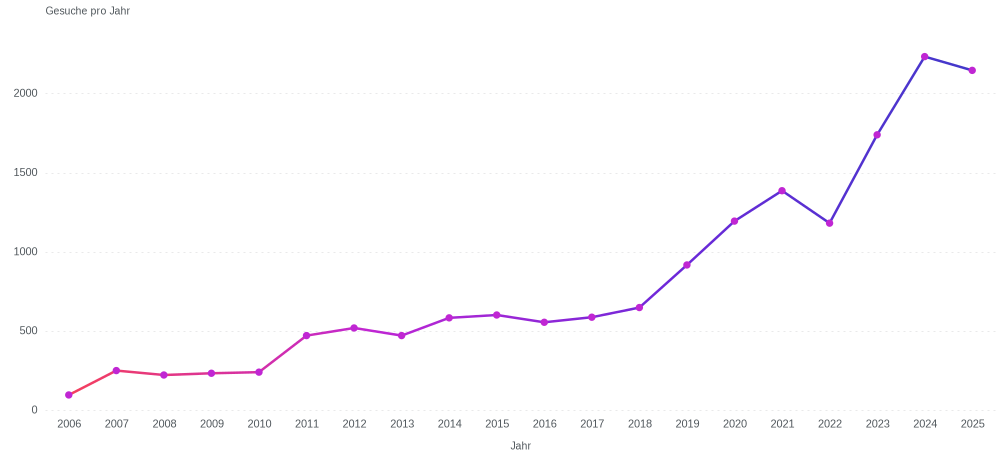
Less full access
Outcome of access requests under the FoIA, 2019 to 2025, in percent
Data ↗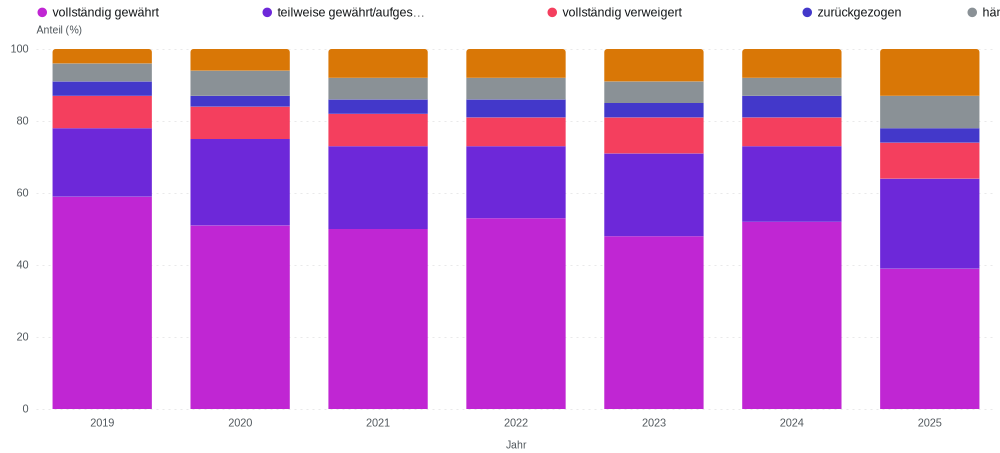
Mediation takes too long
Share of FDPIC mediation procedures completed within 30 days, 2018 to 2025
Data ↗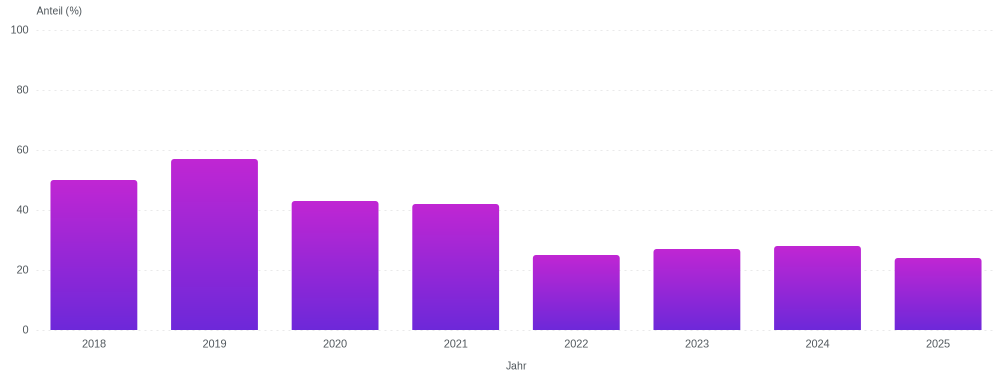
Exemptions and comparison
- Growing exemptions: since 2006 the Federal Council and Parliament have inserted 13 exemptions in special legislation, and according to the FDPIC at least 11 more are planned, often for supervisory authorities.
- Sweden: the principle of public access has applied since the Freedom of the Press Ordinance of 1766 and is now enshrined in Chapter 2 of the Tryckfrihetsförordningen (1949:105) [Freedom of the Press Act], i.e. at constitutional level. Authorities must release records promptly ("skyndsamt"); exemptions are listed exhaustively in the Public Access to Information and Secrecy Act.
- Estonia: the Public Information Act requires authorities to maintain publicly accessible electronic document registers; requests must be answered within five working days and are in principle free of charge.
Interests and terms of office
Members of the Federal Assembly must disclose their professional activities, mandates and advisory functions and, since December 2019, state whether a mandate is paid or unpaid (Art. 11 ParlA). The Parliamentary Services publish the register online. The amount of remuneration does not have to be disclosed. There are no term limits at federal level, but there are in some cantons: in the Grand Council of Basel-Stadt, a four-year break is required after 16 years; in the Landrat of Basel-Landschaft, members who have served four consecutive terms may not stand for the next one (§ 54 KV BL [cantonal constitution]).
What this means for policy
- Justify exemptions and give them a time limit: every new exemption from the FoIA with a public justification and an expiry date; the existing 13 are reviewed: Open Government.
- Proactive rather than on request: document registers on the Estonian model, so that documents do not have to be requested individually in the first place.
- Meet deadlines: resource the FDPIC so that the 30-day deadline is the rule again; measure it publicly every year.
- Put a figure on interests: disclose income from mandates in bands; examine term limits on the Basel model.
Sources
- FDPIC: 33. Tätigkeitsbericht 2025/2026 [33rd activity report], chapter on the freedom of information principle and statistics on access requests 2025. https://www.edoeb.admin.ch/dam/de/sd-web/ZgZZm5CLxIFF/33_T%C3%A4tigkeitsbericht%202025-2026%20DE_Web.pdf
- FDPIC: 32. Tätigkeitsbericht 2024/2025 [32nd activity report] (free of charge since 1 November 2023). https://www.oeffentlichkeitsgesetz.ch/deutsch/files/2025/07/Taetigkeitsbericht-DE.pdf
- Bundesgesetz über das Öffentlichkeitsprinzip der Verwaltung (BGÖ) [Federal Act on Freedom of Information in the Administration], SR 152.3. https://www.fedlex.admin.ch/eli/cc/2006/355/de
- Sveriges riksdag: Tryckfrihetsförordning (1949:105). https://www.riksdagen.se/sv/dokument-och-lagar/dokument/svensk-forfattningssamling/tryckfrihetsforordning-1949105_sfs-1949-105/
- Regeringskansliet: Offentlighetsprincipen och sekretess, kortfattat om lagstiftningen. https://regeringen.se/contentassets/243fe724fd9a41218886261ff999fc2a/offentlighetsprincipen-och-sekretess--kortfattat-om-lagstiftningen
- Riigi Teataja: Public Information Act (Avaliku teabe seadus). https://www.riigiteataja.ee/en/eli/ee/Riigikogu/act/514112013001/consolide
- Kultuuriministeerium (Estonia): File a request for information. https://kulka.ee/public-information/file-a-request-for-information
- Parliamentary Services: Offenlegungspflicht der Ratsmitglieder [disclosure obligation of members]. https://www.parlament.ch/de/%C3%BCber-das-parlament/parlamentsportraet/ratsmitglieder/rechtsstellung-der-ratsmitglieder/offenlegungspflicht
- Grosser Rat Basel-Stadt: Broschüre 2025. https://grosserrat.bs.ch/images/dateien/broschuere/2025_broschuere.pdf
- Verfassung des Kantons Basel-Landschaft [Constitution of the Canton of Basel-Landschaft], SGS 100, § 54. https://bl.clex.ch/data/100
Data & code
- Data (CSV)
- Chart data (JSON) · transparenz_gesuche_verlauf
- Chart data (JSON) · transparenz_ergebnisse
- Chart data (JSON) · transparenz_schlichtung_frist
- Code & notebook on GitHub
Change log
- First publication.
Cite as: Die Zukunft, Zukunftslabor (2026): «Transparent by Law: 20 Years of the Freedom of Information Principle in Figures». https://die-zukunft.ch/en/zukunftslabor/notizen/transparent-per-gesetz/ · CC BY 4.0