Rent Burden: How Hard Do Rents Hit the Bottom Quintile in Each Canton?
The bottom quintile spends 40% on rent — and, measured against cantonal rents, is already above the 30% threshold in every canton.
Partly outdated Checked on 08.11.2026 Rent burden by quintile and cantonal rents up to 2023 checked; SILC 2024 and the structural survey 2024 are available and have not yet been incorporated. Change log (1)
The bottom quintile spends 40% on rent. Measured against cantonal rents, it was already above the 30% threshold in all 26 cantons in 2023 — from 33% in Jura to 65% in Zug.
Methodology
FSO rent statistics (2010–2023, 3-room flats by canton) and FSO SILC rent burden ratios. CAGR from the 2010/2023 ratio.
Rent burden by income quintile
Rent burden ratio by income quintile
Data ↗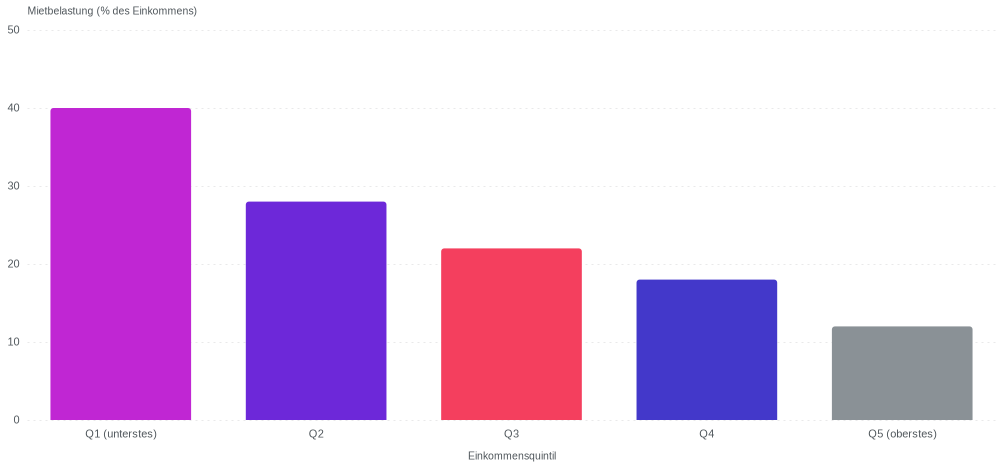
Rents by canton
Rents by canton for 3-room flats
Data ↗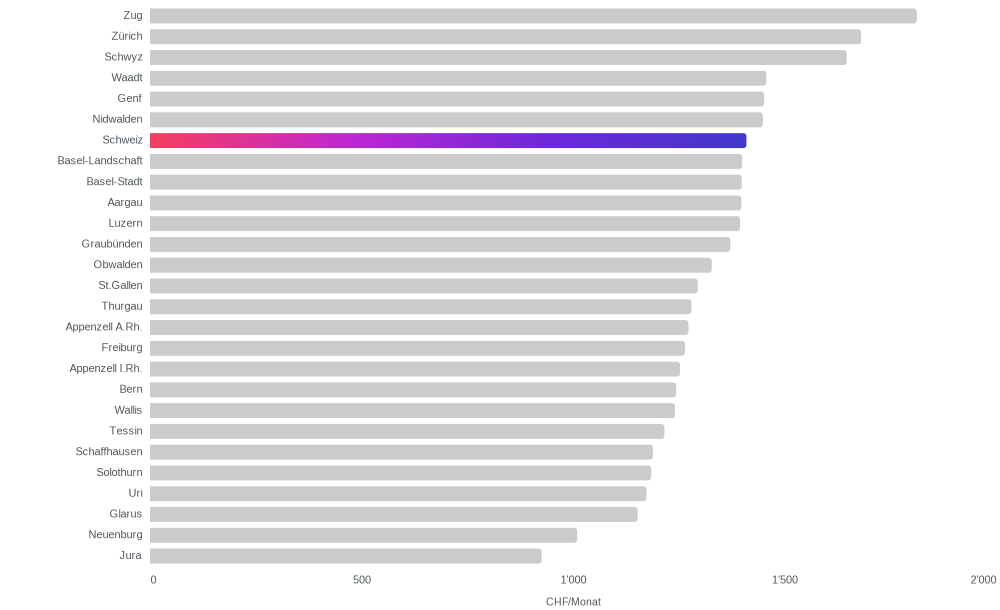
Rent growth (CAGR)
Annual rent growth by canton
Data ↗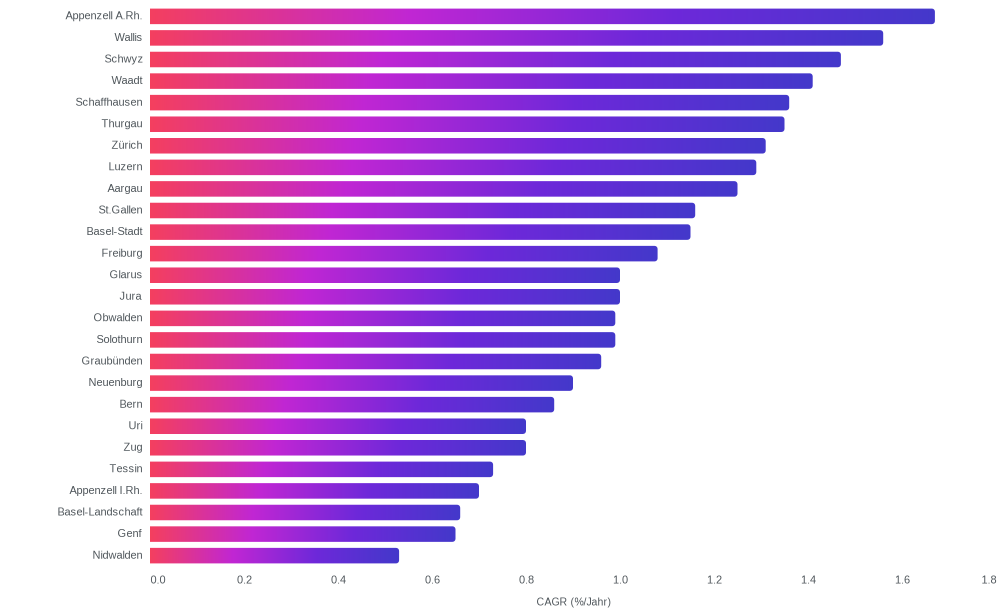
Limitations
- CAGR describes the 2010–2023 trend, not a forecast
- Q1 income not differentiated by canton
- Existing rents (rents for new tenancies are often higher)
Data sources
- FSO Structural Survey: rents by canton and number of rooms
- FSO SILC 2022: rent burden ratio by quintile
Data & code
- Chart data (JSON) · wohnen_mietbelastung_quintile
- Chart data (JSON) · wohnen_mieten_kantone
- Chart data (JSON) · wohnen_mietpreiswachstum_kantone
- Code & notebook on GitHub
Change log
- Statements on quintiles and cantons aligned with the data, and the uninformative threshold projection removed because the bottom quintile is already above 30% in every canton.
Cite as: Die Zukunft, Zukunftslabor (2026): «Rent Burden: How Hard Do Rents Hit the Bottom Quintile in Each Canton?». https://die-zukunft.ch/en/zukunftslabor/notizen/mietbelastung-kantonale-prognose/ · CC BY 4.0