Sovereign AI & Compute
Compute is the infrastructure of the 21st century. Switzerland needs its own capacity, open models and the ability to audit and operate AI itself.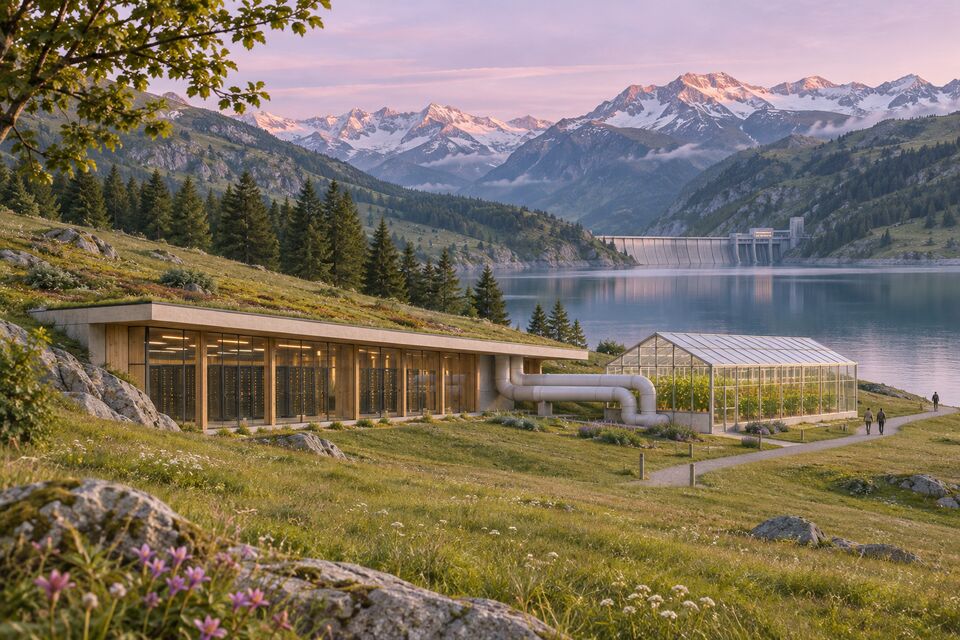
Why this matters now
AI is becoming the foundation of public administration, health, industry and research. Without its own computing capacity and its own models, a country depends on a few foreign providers: on their prices, their rules and their off switches. With the Alps supercomputer and the open language model Apertus, Switzerland has an excellent starting position. What is missing is a strategy that turns this into national infrastructure.
Our principles
- Compute is infrastructure, like roads and electricity, not time-limited project money.
- Open where possible: open weights, open training data, open code.
- Sovereign where necessary: critical applications run on systems we can audit, operate and replace.
- Accessible to all: universities, SMEs, municipalities and schools, not just corporations.
The AI infrastructure package
1. National computing capacity
- Increase publicly accessible AI computing capacity tenfold by 2030
- Long-term funding instead of time-limited project money, as recommended by the Science Council in 2026
- Fast permits for data centres with waste-heat recovery and a secure electricity supply
2. Sovereign models
- Develop Apertus and its successors further as open Swiss foundation models
- All national languages, including Romansh and Swiss German
- Public access for the population, schools and SMEs, not just for research
3. AI in the state
- Secure AI tools on Swiss infrastructure for every administrative unit
- Routine cases automated, every decision explained and open to appeal
- Open tenders instead of lock-in to individual AI providers
4. Audit and safeguard
- A national AI testing lab for safety, robustness and fairness
- Clear liability and human responsibility for decisions about people
- Sector-specific rules instead of blanket bans, in line with the Council of Europe's AI Convention
What this means in everyday life
- An AI assistant in your language, whose data stays in Switzerland
- Faster, clearer answers from the authorities
- SMEs that can use AI without tying themselves to one corporation
- Research that creates companies and jobs in Switzerland
Indicators
- 2027: National AI infrastructure strategy with secured funding
- 2028: An open Swiss model in use in the federal administration
- 2030: Ten times more publicly accessible AI computing capacity than today
Evidence from the Future Lab
Data, analyses and indicators for this pillar.
Frequently asked questions
Can Switzerland keep up with the US and China?
Not across the board, and it doesn't need to. It needs to be able to audit and adapt models itself and to operate them for critical tasks. With Alps, ETH, EPFL and open models like Apertus, that is realistic.
Why not simply use the best models from the big providers?
For many applications, that is exactly what we do. But for critical areas such as public administration, health and justice, we need systems we can audit and keep running, even if prices, laws or political relations abroad change.
Don't data centres use too much electricity?
In 2024, data centres used around 3.6 percent of Swiss electricity, and the trend is rising. That is why we plan for the demand: efficiency standards, use of waste heat and additional, reliable generation, especially in winter.
What about artificial general intelligence (AGI)?
Nobody knows when systems will arrive that can handle almost any cognitive task at human level. Many researchers consider it likely within the next few decades, some much sooner. We are aligning policy so that Switzerland is prepared in either case: with its own capacity, the ability to audit, and a dividend that shares the gains.
Does sovereign mean shutting ourselves off?
No. Sovereign means having alternatives. We work with Europe and the world, and open models are ideal for that. But critical systems must not depend on a single provider or state.
Switzerland should build AI, not just buy it. Get involved.